Should You Negotiate With Your Landlord or Just Follow the Law? A Smart Renter’s Guide
Blog post description.
1/16/20263 min read
Should You Negotiate With Your Landlord or Just Follow the Law? A Smart Renter’s Guide
When renters want to end a lease, many ask the same question:
“Should I try to negotiate with my landlord… or just follow the legal process?”
At first, negotiation feels safer.
More human.
Less confrontational.
But in the United States, negotiation without structure often creates risk instead of reducing it.
This article explains when negotiation helps, when it hurts, and why procedure—not persuasion—is what actually protects renters.
Why Negotiation Feels Like the Right First Move
Negotiation appeals to renters because it promises:
A faster resolution
Less paperwork
Less tension
A “friendly” outcome
Many tenants believe that if they explain their situation clearly, the landlord will meet them halfway.
Sometimes that happens.
Often, it doesn’t.
And when it doesn’t, negotiation leaves damage behind.
The Hidden Cost of Negotiating First
The biggest mistake renters make is negotiating before establishing their legal position.
When you negotiate too early, you often:
Reveal uncertainty
Admit facts unnecessarily
Concede leverage you didn’t know you had
Reset timelines informally
Landlords are experienced negotiators. Most renters are not.
Negotiation without a strong legal baseline shifts power immediately.
Why Procedure Protects You Automatically
Legal procedure does something negotiation cannot:
👉 It creates enforceable outcomes without needing agreement.
When you:
Follow notice rules
Use correct delivery
Calculate dates properly
the lease termination timeline moves forward regardless of the landlord’s feelings.
Procedure doesn’t argue.
It operates.
The Myth of “Keeping Things Friendly”
Many renters avoid formal notice because they fear:
Upsetting the landlord
Damaging the relationship
Making things harder
Ironically, avoiding procedure often makes things worse.
Unstructured negotiation leads to:
Confusion
Disputes about what was agreed
Rewritten history
Sudden enforcement later
Formality often reduces conflict by removing ambiguity.
When Negotiation Actually Makes Sense
Negotiation is not always wrong.
It can be useful after procedure is established.
Negotiation works best when:
Notice has already been given correctly
Legal exposure is clear
Deadlines are locked
Documentation exists
At that point, negotiation happens on stable ground.
Before that, it’s guesswork.
The Difference Between Discussing and Negotiating
There’s a critical difference renters miss.
Discussing is clarifying logistics
Negotiating is altering rights and obligations
Discussing after notice is normal.
Negotiating before notice is risky.
Know which one you’re doing.
Why Verbal Agreements Are Especially Dangerous
Many renters accept verbal compromises:
“Don’t worry about the letter.”
“We’ll work it out.”
“Just move out and we’ll settle later.”
These statements feel reassuring.
They are legally fragile.
Verbal agreements:
Are hard to prove
Are easily reinterpreted
Rarely override written leases
When things go wrong, verbal promises disappear.
How Landlords Use Negotiation Strategically
Experienced landlords use negotiation to:
Delay notice
Restart clocks
Extract admissions
Secure concessions
This doesn’t require bad faith.
It only requires imbalance of experience.
Renters who negotiate blindly often give up protection unknowingly.
Why “Being Reasonable” Isn’t a Legal Strategy
Many renters believe:
“If I’m reasonable, everything will be fine.”
Reasonableness is subjective.
Procedure is not.
Courts enforce compliance, not tone.
You can be polite and procedural.
You cannot replace procedure with politeness.
The Safer Order of Operations
A smart renter follows this order:
Understand the lease and state law
Send a compliant termination letter
Lock in dates and proof
Then discuss logistics or adjustments
This order protects you even if negotiation fails.
Reverse it, and risk increases dramatically.
How Negotiation Can Backfire After Termination
Even after notice, careless negotiation can:
Create new obligations
Blur termination dates
Invite revised terms
This is why post-notice communication should be:
Written
Minimal
Procedural
Negotiation should never contradict the notice.
Why Many Renters Regret “Working It Out”
Renters often say:
“I wish I had just done it formally from the start.”
Regret usually comes from:
Lost leverage
Extra rent
Deposit disputes
Ambiguous timelines
The desire to avoid conflict ends up creating it.
The Professional Rule: Procedure First, Negotiation Second
Professionals don’t avoid negotiation.
They just refuse to negotiate from a weak position.
Once procedure is established:
Negotiation becomes optional
Concessions become calculated
Outcomes become predictable
Without procedure, negotiation is hope.
The Bottom Line
Negotiation is not protection.
Procedure is.
You don’t need to be aggressive.
You need to be correct.
When you follow the law first, you can negotiate calmly—or not at all—without risking your rights.
👉 Stop Guessing, Start Controlling the Process
If you want:
A clear, step-by-step legal process
Confidence before talking to landlords
Templates that lock in protection
Guidance on when to negotiate (and when not to)
A clean, controlled exit
Then don’t rely on instinct.
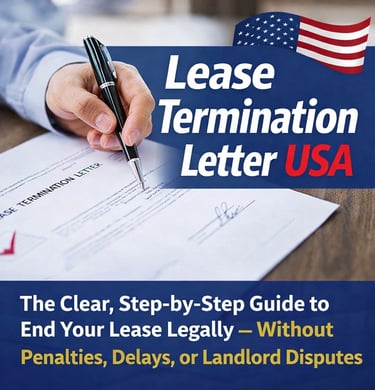
Download Lease Termination Letter USA
A complete guide with over 60 pages of practical, legally aware content, designed to help U.S. renters end leases correctly, protect leverage, and avoid costly negotiation mistakes.
Negotiate if you want.
Protect yourself first.https://leaseterminationletterusa.com/lease-term-letter-usa-guide
Help
Questions? Reach out anytime.
Contact
support@leaseterminationletterusa.com
© 2026. All rights reserved.